
Grand Prairie Police Blotter
Grand Prairie police blotter records document arrests, bookings, incident reports, and calls for service in this mid-cities area between Dallas and Fort Worth. The Grand Prairie Police Department tracks police blotter data for all activity within city limits. Most of these records are public under state law. You can search for Grand Prairie police blotter records through the police department, the Dallas County District Clerk, or state databases that aggregate crime data from Texas agencies. Online tools let you check arrest info and case status from anywhere.
Grand Prairie Overview
Grand Prairie Police Department Records
The Grand Prairie Police Department covers all areas within city limits and handles the majority of police blotter activity for the city. GPPD has divisions for patrol, investigations, traffic enforcement, and specialized units. All officers are licensed through the Texas Commission on Law Enforcement. The records section manages public access to arrest reports, incident logs, and other Grand Prairie police blotter documents.
Grand Prairie sits between Dallas and Fort Worth, with parts of the city in both Dallas and Tarrant counties. Most of Grand Prairie falls within Dallas County. Crime stats go to the Texas Department of Public Safety each year. You can request records in person, by mail, or through the city's open records process. Simple lookups are often done quickly. Larger requests may take additional time and could require a cost estimate if the total goes past $40.
The screenshot below shows the DPS Crime Records page, which aggregates data from Grand Prairie and other Texas agencies.
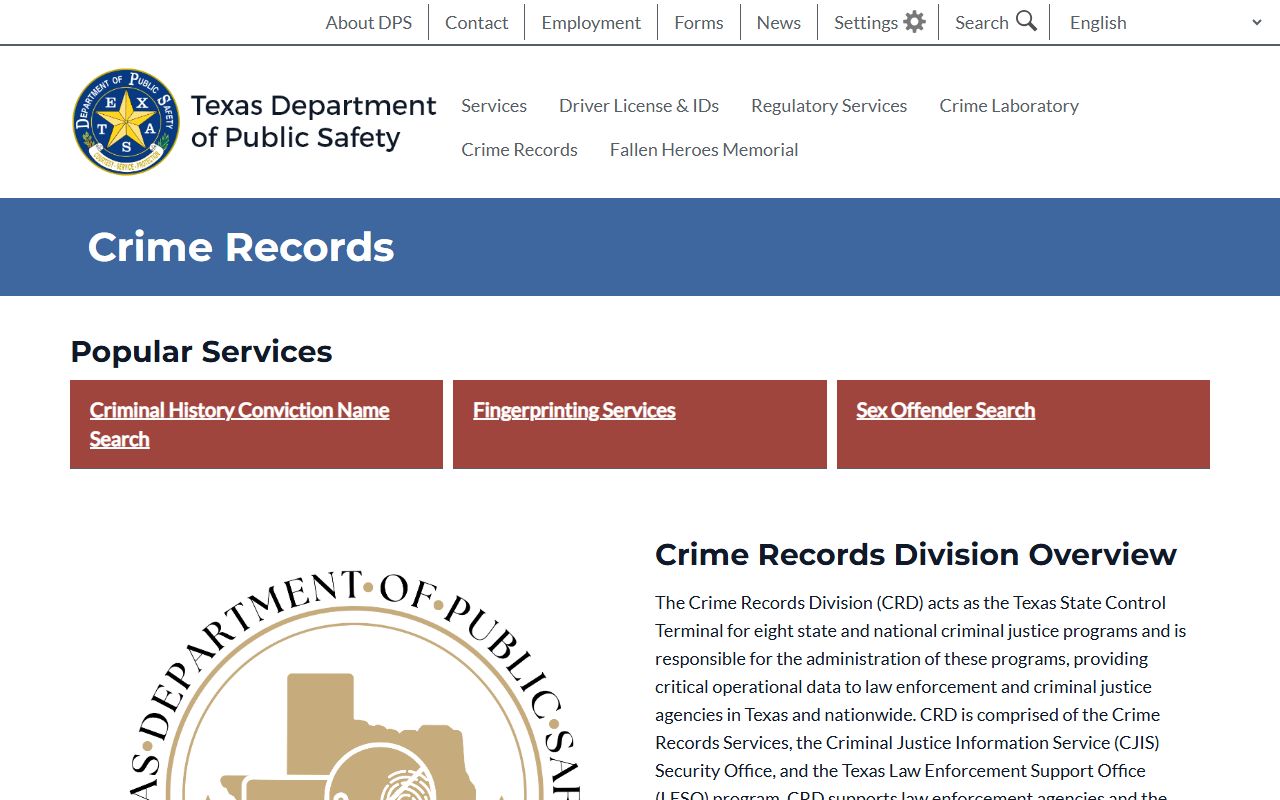
The DPS portal covers statewide conviction data, including records that originate from Grand Prairie police blotter entries.
| Agency | Grand Prairie Police Department |
|---|---|
| Location | Grand Prairie, Texas |
| County | Dallas County |
| Records | Arrest reports, incident logs, booking data, crash reports |
Search Grand Prairie Police Blotter
You can search Grand Prairie police blotter records several ways. The Dallas County District Clerk's website lets you look up criminal cases by name or case number. This covers arrests from Grand Prairie that entered the county court system. For statewide results, the DPS Crime Records Division runs the Texas Crime Information Center.
A name-based criminal history search costs $10 under Texas Government Code Section 411.083. This returns conviction records from across Texas, including Grand Prairie. Fingerprint checks cost $15 and are more precise. Public users see conviction data but not sealed or expunged records. The DPS system covers all agencies that report to the state.
The VINE Link system shows custody status for people in the Dallas County Jail. Sign up for free alerts when someone is released or transferred. VINE updates several times daily.
Note: Grand Prairie police blotter records tied to open investigations may be held back until the case is resolved.
Grand Prairie Arrest Records
Arrests in Grand Prairie create a police blotter entry during booking. Most people arrested in Grand Prairie go to the Dallas County Jail or the Tarrant County Jail depending on where in the city the arrest occurred. Each booking entry includes charges, bond amount, booking photo, and court date. Monthly population data goes to the Texas Commission on Jail Standards.
Booking photos are generally public under Texas Government Code Chapter 552. Bond is set by a magistrate after the arrest. Body camera footage from Grand Prairie officers falls under public records law, though large video files may require additional processing time.
Grand Prairie's location between two major cities means the police blotter includes a wide range of cases. Officers handle everything from retail theft at local shopping centers to DWI stops on the highways that run through the city. The dual-county setup can be confusing, so check which county processed the arrest before searching court records. Dallas County handles most Grand Prairie cases, but some on the west side go through Tarrant County instead.
Grand Prairie Court Records
Grand Prairie Municipal Court handles Class C misdemeanors. Traffic violations, minor theft, and disorderly conduct cases connect to Grand Prairie police blotter citations.
More serious charges go to Dallas County courts (or Tarrant County courts for arrests on that side of the city). County Criminal Courts at Law take misdemeanors. District Courts handle felonies. The District Clerk keeps criminal court records. You can search online or through the Texas eFiling portal. When a Grand Prairie police blotter arrest leads to a felony, the full case file goes to the appropriate District Clerk's office.
Public Records in Grand Prairie
Most Grand Prairie police blotter records are public. The Texas Public Information Act gives anyone the right to request records from GPPD, the Dallas County Sheriff, or other agencies. No reason is needed. The agency must respond within 10 business days. Copies cost $0.10 per page.
Active investigations can be withheld under Government Code Section 552.108. Juvenile records stay sealed. The Texas Attorney General's Open Government Division handles disputes when agencies refuse to release records that should be public. Their hotline is (877) 673-6839.
Grand Prairie Police Blotter Resources
The TDCJ Offender Search covers inmates in the state prison system. The Texas State Law Library offers free statutes and legal research. The Texas Missing Persons Clearinghouse runs alert programs across the state that tie into police blotter data.
The Texas Forensic Science Commission oversees crime labs that handle evidence from Grand Prairie cases. The TxDOT Crash Records Information System covers vehicle accidents that generate Grand Prairie police blotter entries.
Dallas County Police Blotter
Grand Prairie sits primarily in Dallas County. Criminal cases go through the Dallas County court system. The county handles jail operations and court processing for Grand Prairie police arrests.
Nearby Cities
These cities are near Grand Prairie. Police blotter records are filed where the arrest or incident took place.