
Search Dallas County Police Blotter
Dallas County police blotter records document arrests, bookings, incident reports, and jail activity from law enforcement agencies across one of the largest counties in Texas. The Dallas County Sheriff's Department and dozens of city police departments contribute to police blotter data in the county. You can search for records through the sheriff's office, city police agencies, county courts, or several state databases. With over 2.6 million residents and major cities like Dallas, Irving, Garland, and Grand Prairie, police blotter activity in Dallas County is heavy and spread across many jurisdictions.
Dallas County Overview
Dallas County Sheriff and Police Blotter Data
The Dallas County Sheriff's Department is one of the largest sheriff's offices in Texas. It runs the Dallas County jail, one of the biggest county jail systems in the state. The sheriff handles patrol in unincorporated areas, courthouse security, civil process, and warrant service. Deputies must hold a license from the Texas Commission on Law Enforcement. The department also runs a fugitive unit, a narcotics task force, and specialized investigative teams.
Dallas County police blotter records from the sheriff's department include booking data, arrest reports, and incident logs from deputies on patrol. The jail processes thousands of bookings each month. Crime data is reported to the Texas DPS Crime Records Division annually. Booking photos and basic arrest information are generally public under Texas Government Code Chapter 552. The sheriff's online jail search lets you look up current inmates by name.
Dallas County also has many city police departments that generate police blotter records. The Dallas Police Department is the largest. Irving, Garland, Grand Prairie, Mesquite, and Richardson all run their own police departments. Each agency keeps its own records, so where you search depends on which city handled the arrest or call.
The county does not have a dedicated local website screenshot, so the image below shows the Texas DPS Crime Records page, a key statewide tool for Dallas County police blotter searches.
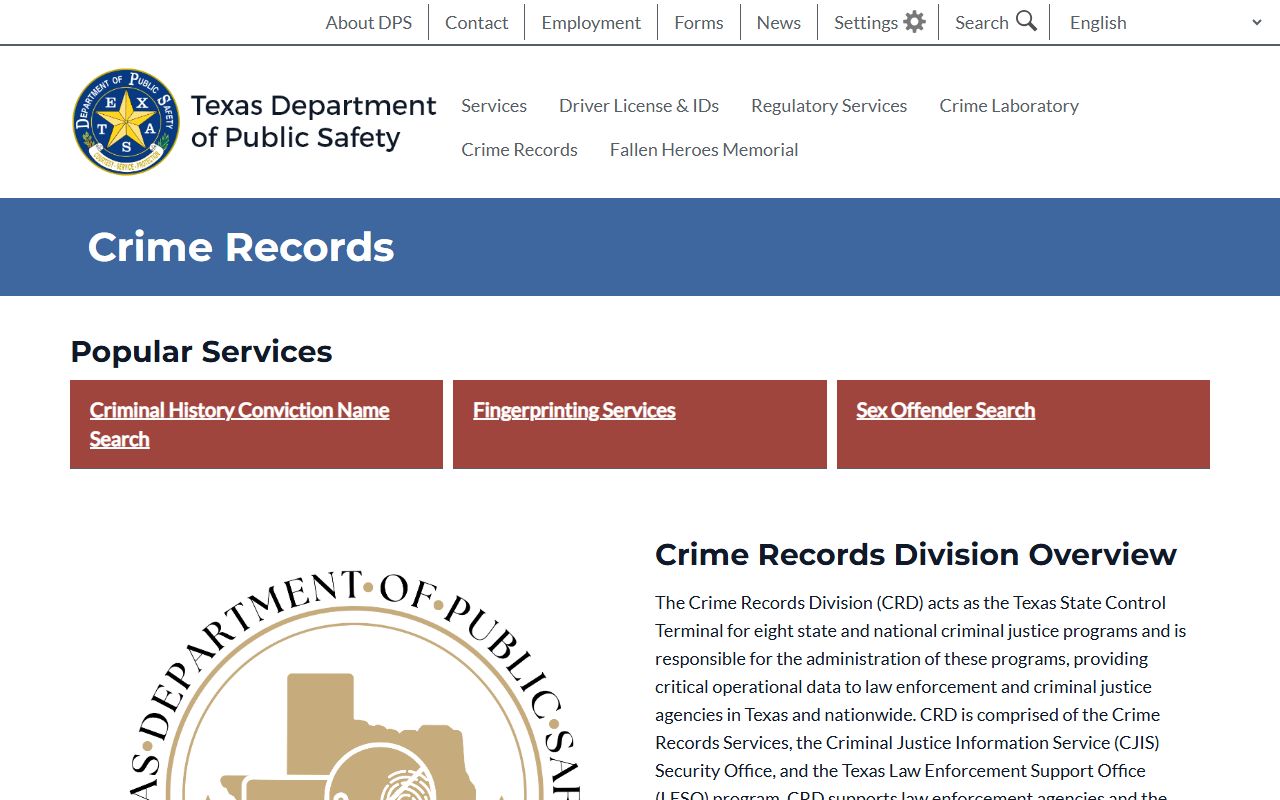
The DPS Crime Records portal is one of the best starting points for statewide searches that include Dallas County arrest data.
| Office | Dallas County Sheriff's Department |
|---|---|
| Location | Dallas, Texas |
| Records | Arrest reports, booking logs, jail roster, incident data, warrant info |
Search Dallas County Police Blotter Records
Searching Dallas County police blotter records starts with knowing which agency made the arrest. If a Dallas police officer handled it, contact Dallas PD. For county areas, the sheriff's department is the place to start. Each city in Dallas County has its own police force with its own records system.
The DPS Crime Records Division offers statewide criminal history searches that cover Dallas County. A name-based search costs $10 under Texas Government Code Section 411.083. It returns conviction records and deferred adjudication from all Texas counties. Fingerprint-based searches cost $15 and are more precise. Public users see conviction data but not sealed or expunged cases.
The VINE Link system tracks custody status for people booked into the Dallas County jail. It updates several times a day. You can register for free alerts when an inmate is released, moved, or has a status change. This is a useful tool for crime victims tracking cases on the Dallas County police blotter.
Dallas County also has a robust court records search. The District Clerk offers online case lookups by name, case number, or attorney. This covers felony and misdemeanor cases that started as police blotter arrests.
Note: For records from city police departments in Dallas County, contact that specific city's records division.
Dallas County Arrest and Jail Records
The Dallas County jail is one of the largest in Texas. It processes a high volume of bookings every day. When someone is arrested, the booking process creates a police blotter entry with charges, bond amount, booking photo, and court date. The jail holds pre-trial detainees and sentenced inmates serving shorter terms. Monthly population data goes to the Texas Commission on Jail Standards.
TCJS inspects the Dallas County jail each year. Compliance reports are posted online. The jail has faced capacity challenges over the years due to the sheer volume of arrests in a metro area this size. Bond amounts for Dallas County arrests are set by magistrates based on the charge and the defendant's history. Some low-level offenses qualify for personal recognizance bonds, which means no cash is needed to get out.
Constable offices in Dallas County serve civil process, execute warrants, and provide security for justice courts. There are multiple justice of the peace precincts. These courts handle Class C misdemeanors, small claims, and eviction cases. Many lower-level offenses from the Dallas County police blotter pass through these courts.
Court Records in Dallas County
The Dallas County District Clerk's office keeps criminal court records for felony cases, civil filings, and family law matters. When a police blotter arrest leads to a felony charge, the case file goes here. The office has an online case search. You can also use the Texas eFiling portal for cases filed electronically.
Dallas County has multiple district courts, county courts at law, and criminal courts. The criminal district courts handle felony cases. County criminal courts handle misdemeanors. With this many courts, the volume of cases connected to the Dallas County police blotter is significant. Court records include charging documents, plea information, sentencing data, and case dispositions. The County Clerk maintains property records, deeds, and marriage licenses in a separate system.
Public Records in Dallas County
Most Dallas County police blotter records are public. The Texas Public Information Act gives anyone the right to request records. You do not need a reason. Agencies must respond within 10 business days. Standard copies are $0.10 per page.
Some records have limits. Active investigation files can be held back under Government Code Section 552.108. Juvenile records are sealed under the Texas Family Code. Records that have been expunged or sealed by court order are not available. If a Dallas County agency denies a request you think should be granted, the Texas Attorney General's Open Government Division can review the decision.
With so many agencies in Dallas County, you may need to file requests with more than one office. The sheriff, city police, district clerk, and county clerk all keep different types of records. Knowing which agency has what you need will save you time.
Dallas County Cities Police Blotter
Dallas County includes several major cities, each with its own police department and records system. Police blotter records are kept by the agency that handled the arrest or incident. Here are the qualifying cities in Dallas County:
Each of these cities maintains its own police blotter records. For arrests within city limits, contact that city's police department. For arrests in unincorporated Dallas County, the sheriff handles the records.
Dallas County Police Blotter Resources
The TDCJ Offender Search covers people in the state prison system. It shows facility location, offense history, and release dates. Many inmates in TDCJ came through the Dallas County jail first. The Texas State Law Library offers free access to statutes and legal research tools.
The Texas Missing Persons Clearinghouse runs Amber Alert, Silver Alert, and Blue Alert programs. These tie into police blotter work across Texas. The Texas Forensic Science Commission oversees crime labs that process evidence from Dallas County cases. Lab reports and compliance data are public. For crash reports involving Dallas County law enforcement, the TxDOT Crash Records Information System has data going back several years.
Dallas County's sheriff budget and staffing levels are set by the Commissioners Court. The county also funds a public defender's office and a pretrial services division. These offices work alongside the police blotter system to process cases from arrest through disposition.
Nearby Counties
These counties border Dallas County. Police blotter records are filed in the county where the event took place, so check the arrest or incident address if you are not sure.