
Tarrant County Police Blotter
Tarrant County police blotter records track arrests, bookings, and incident reports filed across one of the most populated counties in Texas. The Tarrant County Sheriff's Office in Fort Worth handles police blotter data for unincorporated areas, while city police departments in Fort Worth, Arlington, and Mansfield process their own calls and arrests. You can search for these records through county and city agencies, state databases, or by filing a public information request. With over two million residents, Tarrant County generates a high volume of police blotter activity. Most of these records are public under the Texas Public Information Act.
Tarrant County Overview
Tarrant County Sheriff and Police Blotter
The Tarrant County Sheriff's Office is headquartered in Fort Worth. It covers all unincorporated areas and operates one of the largest county jails in Texas. The sheriff is elected to a four-year term under the Texas Constitution. All deputies must be licensed by the Texas Commission on Law Enforcement. The office handles patrol, criminal investigations, civil process service, courthouse security, and jail operations. It also manages sex offender registration for the county.
Tarrant County police blotter entries include arrest reports, booking data, and incident logs from both the sheriff's office and multiple city police departments. The Fort Worth Police Department is the largest agency in the county and generates a significant share of police blotter records. Arlington and Mansfield police departments also contribute heavily to the overall volume. Crime statistics from all agencies are reported each year to the Texas Department of Public Safety for the Uniform Crime Reporting program. Booking photos and arrest details are generally public under Texas Government Code Chapter 552.
The Texas DPS Crime Records portal shown below is one way to run statewide searches that include Tarrant County police blotter data.
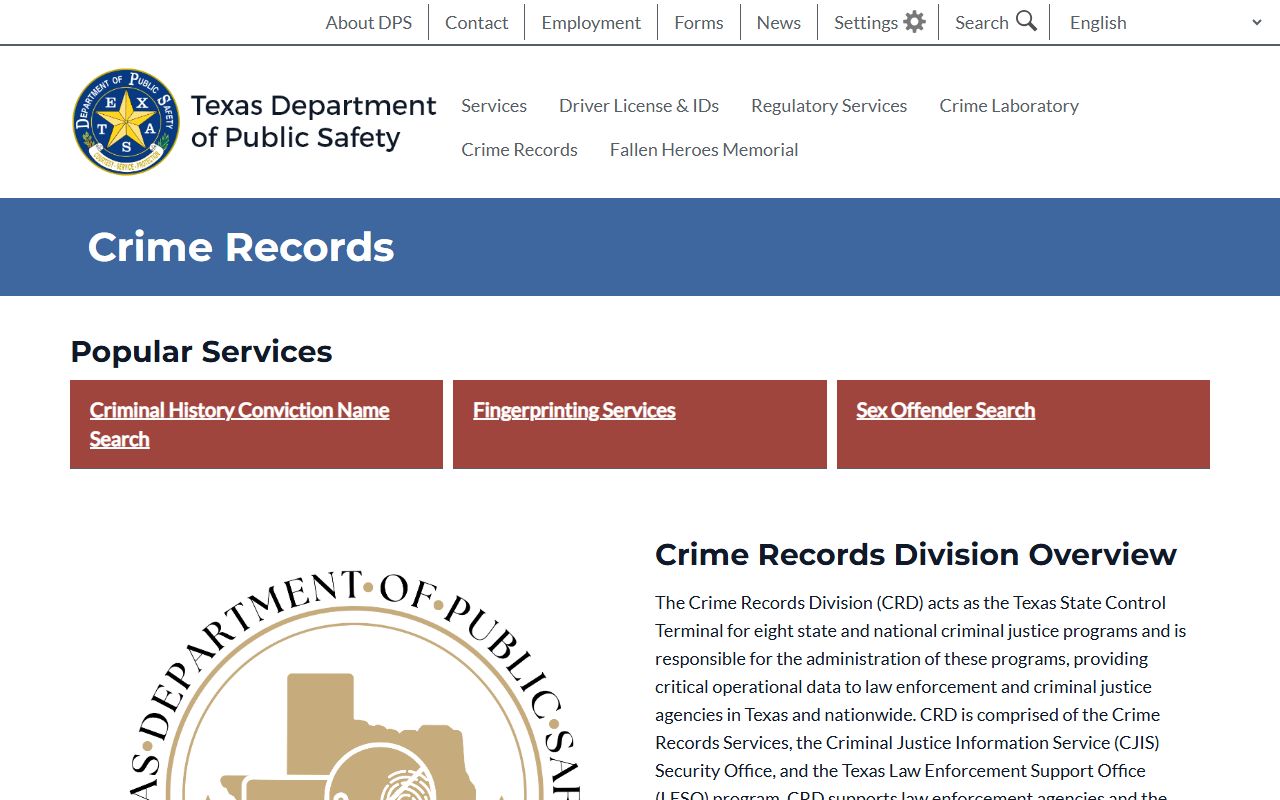
This portal links to criminal history search tools that pull arrest and conviction data from agencies across Texas, including Tarrant County.
| Office | Tarrant County Sheriff's Office |
|---|---|
| Location | Fort Worth, Texas |
| Records | Arrest reports, booking logs, incident data, warrant info |
Search Tarrant County Police Blotter
There are several ways to search Tarrant County police blotter records. The sheriff's office handles requests for arrests, warrants, and incident data in unincorporated areas. For arrests within city limits, contact the relevant police department. Fort Worth, Arlington, and Mansfield each maintain their own records divisions.
For statewide searches covering Tarrant County, the DPS Crime Records Division runs the Texas Crime Information Center. A name-based search costs $10 under Texas Government Code Section 411.083. This returns conviction data and deferred adjudication records from all Texas agencies, including those in Tarrant County. Fingerprint-based searches cost $15 and provide more exact matches. Public users can access conviction records but not sealed or expunged files.
The VINE Link system tracks custody status for people booked into the Tarrant County jail. You can sign up for free alerts when an offender is released, transferred, or escapes. VINE updates multiple times daily and covers county and state facilities. This is one of the best real-time tools for monitoring police blotter activity in Tarrant County.
Note: Because Tarrant County has so many agencies, you may need to contact the specific city police department for records tied to arrests within that city.
Tarrant County Arrest and Jail Records
When someone is arrested in Tarrant County, the booking process creates a police blotter entry. This includes the arrest report, charges, bond amount, booking photo, and court date. The Tarrant County Jail in Fort Worth is one of the largest county jails in Texas. It holds thousands of pre-trial detainees and sentenced inmates at any given time. Jail capacity and population numbers go to the Texas Commission on Jail Standards each month. TCJS inspects the facility yearly and posts compliance reports online.
Arrests in Fort Worth are processed through the Fort Worth Police Department before inmates are transferred to county custody. Arlington operates its own city jail for short-term holds. Mansfield arrests may go to the city jail or directly to county. Each agency creates its own police blotter records before the case enters the county system.
Constable offices across Tarrant County serve civil process and execute warrants. Justice of the Peace courts handle Class C misdemeanors, small claims, evictions, and preliminary felony hearings. There are multiple JP precincts spread across the county. These courts process a large volume of the lower-level offenses that show up on the Tarrant County police blotter.
Tarrant County Court Records
The Tarrant County District Clerk's office at the Fort Worth Courthouse keeps criminal court records for felony cases, civil filings, and other legal matters. When a police blotter arrest leads to a felony charge, the case file ends up here. You can search by party name or cause number. The Texas eFiling portal provides access to court cases filed electronically in Tarrant County.
The County Clerk's office maintains property records, deeds, liens, and marriage licenses. While these are not part of the police blotter directly, they sometimes connect to fraud or property crime cases. Tarrant County has multiple District Courts, County Criminal Courts, and County Courts at Law. The District Courts handle felony cases and civil matters over $250,000. The County Criminal Courts handle Class A and B misdemeanors. This multi-court system means police blotter arrests in Tarrant County can end up in several different courts depending on the charge level.
The county's criminal justice system is large enough that it has dedicated courts for specific case types, which helps move the high volume of cases through the system.
Public Records Access in Tarrant County
Most Tarrant County police blotter records are public. The Texas Public Information Act in Government Code Chapter 552 gives anyone the right to request records from the sheriff's office, city police departments, or court offices. You do not need to provide a reason. Agencies must respond within 10 business days. Standard copies cost $0.10 per page. Costs over $40 trigger a written estimate first.
To request Tarrant County police blotter records:
- Submit a written request by email, mail, or in person
- Describe the records with enough detail to locate them
- Include your contact information for the response
- Pay any fees before records are released
Some records are restricted. Active criminal investigation files can be withheld under Government Code Section 552.108. Incident reports tied to ongoing cases may not be released until the investigation closes. Juvenile records are sealed under the Texas Family Code. The Texas Attorney General's Open Government Division handles disputes if a Tarrant County agency refuses to release records you believe should be public.
Tarrant County Police Blotter Resources
State tools support police blotter research in Tarrant County. The TDCJ Offender Search covers people in the state prison system with facility, offense, and release data. The Texas State Law Library provides free access to statutes and legal research tools.
The Texas Missing Persons Clearinghouse runs Amber Alert, Silver Alert, and Blue Alert programs across Texas. The Texas Forensic Science Commission oversees crime labs that process evidence from local cases. Tarrant County's size means it has a well-funded crime lab and specialized units that handle evidence for police blotter cases across the county.
Budget and staffing for the Tarrant County Sheriff's Office are set by the Commissioners Court each year. The office runs one of the largest patrol and detention operations in Texas, with hundreds of sworn deputies and corrections officers working across the county.
Nearby Counties
These counties border Tarrant County. If you are not sure which county handles a case, check the address of the arrest or incident. Police blotter records are filed in the county where the event took place.